Litter Box Setup: How Many, Where, and How Often to Clean
Box count, placement, litter depth and cleaning schedule from ASPCA and Cornell.
Quick answer
Keep one litter box per cat plus one extra, so three cats need at least four boxes (ASPCA). Put them in quiet spots that are not cornered, away from food and water dishes. Fill each with litter to a depth of 1 to 2 inches, scoop at least once a day and wash the box once a week. If a cat starts avoiding the box, call your vet.
Jump to section
The n+1 rule
The rule is simple: one litter box for every cat, plus one extra. ASPCA gives it directly, and gives an example: three cats need at least four boxes (ASPCA). The extra box is not a luxury. It gives a cat a second choice when another cat is using the first, or when one box is dirty.
Space matters as much as number. ASPCA also says a home with more than one floor may need a box on each level. If you live in a house with a basement or a second story, put a box where the cat spends its day, not only where it is convenient for you.
This is the same rule whatever kind of box you buy. A self-cleaning box counts as one box, not a replacement for the others. Our comparison of self-cleaning vs regular litter boxes goes into that in more detail.
Here is a quick way to count for your home:
| Cats in the home | Boxes ASPCA's rule gives |
|---|---|
| 1 | 2 |
| 2 | 3 |
| 3 | 4 |
| 4 | 5 |
The table is the rule worked out for each cat count, not a separate source figure. Put each box on the level where your cat spends time.
Where to put boxes (and where not to)
Choose a quiet spot that is not cornered. ASPCA advises placing a box somewhere quiet, with a view and with escape routes, so a cat can see anyone approaching and leave easily. Keep boxes away from high-traffic areas, from washers and dryers, and from food bowls (ASPCA).
The veterinary guidelines say the same about food. The AAFP/ISFM environmental needs guidelines state that "Toileting areas should always be located away from food and water dishes" (AAFP/ISFM). If your feeding station and litter box share a corner, move one of them.
Think about what a cat sees from the box. A box wedged into a corner leaves a cat with one way out. A box in the middle of a hallway gets a lot of foot traffic. A box beside the washer or dryer breaks the ASPCA advice to keep boxes away from them. Walk around your home and check each spot against the ASPCA list before you commit.
If you have several boxes, spread them around the home rather than lining them up, so that a cat in any room has a choice of where to go.
Covered, liners and litter depth
Skip the lid and the liner. ASPCA says most cats dislike covered boxes and box liners, and recommends removing both (ASPCA). If your cat is using a covered box without trouble, you do not need to change anything. If your cat is avoiding the box, removing the cover is a sensible first step.
Depth is the other easy fix. ASPCA gives a litter depth of 1 to 2 inches, and says 3 to 4 inches is too deep (ASPCA). Measure with a ruler once and mark the level on the box with a strip of tape so you can refill to the same height.
If you are shopping for a box, check size before you buy. Our guide to the best litter boxes compares length, width, side height and entry height, which matter for kittens, seniors and large cats.
Which litter most cats prefer
ASPCA says cats generally prefer unscented, clumping litter with a medium-to-fine texture. It also says scented cleaners can cause aversion (ASPCA). That points to a simple starting recipe: plain clumping litter, a texture that feels soft underfoot, and an unscented soap for washing the box.
If you want to change litter, change it gradually. Mix a little of the new litter into the old, and keep one box on the old kind until you see that your cat accepts the new one. A cat that avoids a new litter is telling you something, so do not force it.
Our cat litter picks compare material, clumping, scent and texture, and our clumping vs non-clumping guide explains the main choice. Dust, flushing and cost per pound are covered on the picks page too, but those rest on maker claims or current prices on Amazon, not vet guidance.
Scooping and washing schedule
Scoop at least once a day. Once a week, wash the box with warm water and unscented soap, or with baking soda, or with no soap at all, and fully replace the litter (ASPCA). Skipping the weekly wash means old litter stays in the box, which no amount of scooping fixes.
Here is a simple routine you can follow:
- Every day: scoop waste and clumps, and top up to a depth of 1 to 2 inches.
- Once a week: empty the box, wash it with warm water and unscented soap, baking soda or no soap, dry it and refill it with fresh litter.
If you have several boxes, put the weekly wash on a calendar and rotate through them so each box has a day. A shared household chart helps when more than one person looks after the cat.
Self-cleaning boxes: kitten weights and upkeep
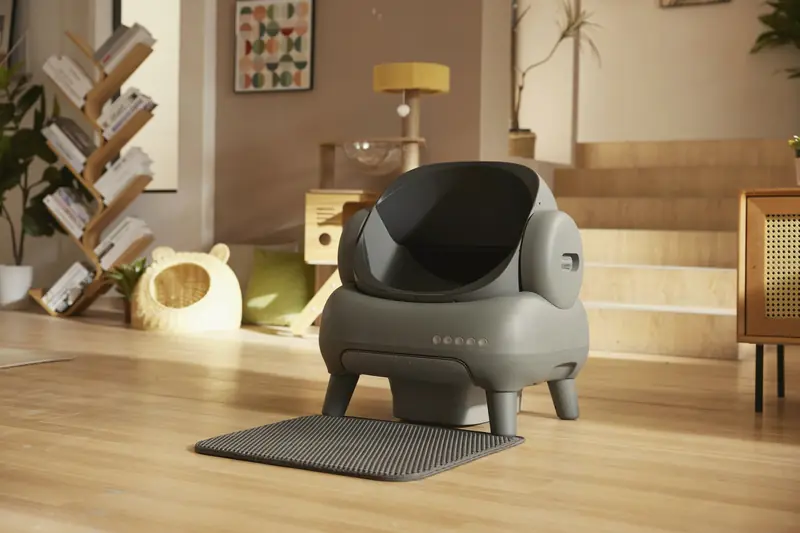
A self-cleaning box reduces scooping, but it does not remove the need to wash it or to keep extra boxes. Think of it as one of your n+1 boxes, with its own rules.
The first rule is weight. Sensor-based boxes need a minimum cat weight. One maker's FAQ for its fourth-generation model states that its scale does not recognize cats under 3 lb (1.3 kg), and says to use semi-automatic mode, with the unit off and a cycle run after about seven minutes, until the kitten is heavier (Litter-Robot FAQ). That is a maker-stated figure for one model. Check the manual for any box you are considering, and ask your vet when your kitten is ready.
The second rule is upkeep. Read the manual for how often the maker says to empty the drawer and clean the parts, and follow the same ASPCA weekly wash and full litter change. Our picks for the best self-cleaning litter boxes list minimum and maximum cat weights, drawer capacity and litter type in one table.
When avoidance means a vet visit
If a cat stops using the box, do not assume it is a behavior problem. ASPCA says to rule out medical causes first: a urinary tract infection, interstitial cystitis, and kidney stones or a blockage. It describes interstitial cystitis as potentially life-threatening, needing immediate veterinary care (ASPCA).
Once your vet has ruled out a medical cause, go back through this guide: count the boxes, check the placement, remove covers and liners, check the depth and switch to unscented clumping litter if your cat will accept it. Change one thing at a time, so you know what helped.
For more on keeping a cat well in the home, see our guide to how much water a cat should drink, since Cornell lists low water intake as a risk factor for lower urinary tract disease.
Gear that helps
-

Best Litter Boxes (Large, Low-Entry and High-Sided)
Compare box size, side height and entry height so every cat in the house can use a box comfortably.
-

Best Cat Litter
Compare clumping, scent and texture to match the litter most cats prefer.
-

Best Self-Cleaning Litter Boxes
Check minimum cat weights and drawer sizes before you add an automatic box.
FAQ
How many litter boxes should I have for one cat?
Two. ASPCA advises one box per cat plus one extra (ASPCA).
How deep should the litter be?
One to two inches. ASPCA says 3 to 4 inches is too deep (ASPCA).
Should the litter box have a lid?
ASPCA says most cats dislike covered boxes and recommends removing the cover (ASPCA).
Related
-
Buying guide
Best Litter Boxes (Large, Low-Entry and High-Sided)
Size, side height, entry height and material for every cat.
-
Buying guide
Best Self-Cleaning Litter Boxes
Minimum cat weight, entry height, drawer size and upkeep, side by side.
-
-

Comparison
Self-Cleaning vs Regular Litter Box: Worth the Money?
Less scooping and more parts, or a simple pan you control.
-

Comparison
Clumping vs Non-Clumping Cat Litter
What cats prefer, how scooping works and what fits your box.
-

Guide
How Much Water Should a Cat Drink? (Vet-Backed Numbers)
The Cornell daily water number, signs of dehydration and ways to help a cat drink.
Get the Cat-Ready Home Checklist
A printable checklist built on AAFP, ASPCA, Cornell and FDA guidance, from how many litter boxes you need to which flowers to keep out. Free, and sized for the fridge door.