Orange and white cat sitting inside a plastic carrier with a mint-green vented side

Best Cat Carriers of 2026: 6 Picks Compared

We may earn a commission when you buy through links on this page. As an Amazon Associate I earn from qualifying purchases. How we make money

A carrier is the piece of gear your cat meets at its most stressed, so small design choices matter. The decisions that matter are the openings, whether the top comes off and whether the size fits your cat. This page is for owners getting ready for a vet visit, a move or a trip.

We compared 6 cat carriers and picked 6.

Our picks at a glance

  1. Sherpa Original Deluxe
    ★ Start here Best overall Sherpa Original Deluxe A soft carrier sized for under-seat airline travel, with Sherpa's Guaranteed On Board program and mesh on all sides.

    $69.99 Price as of Nov 25, 2026, 2:27 AM ET. Details

  2. Sleepypod Air
    Best crash-tested Sleepypod Air A crash-tested carrier that expands for more room once you are seated, for car and air travel.

    $199.99 Price as of Nov 24, 2026, 7:27 PM ET. Details

  3. Petmate Two Door Kennel (24 in)
    Best hard-sided Petmate Two Door Kennel (24 in) Top and front doors make it easier to get a reluctant cat in and out, and the plastic shell wipes clean.

    $32.36 Price as of Nov 24, 2026, 7:27 PM ET. Details

  4. SturdiBag XL
    Best flexible carrier SturdiBag XL A flexible-height soft carrier that squeezes under tight airline seats while keeping a sturdy base.

    $124.00 Price as of Nov 24, 2026, 7:28 PM ET. Details

  5. Henkelion Soft-Sided Pet Carrier (Medium)
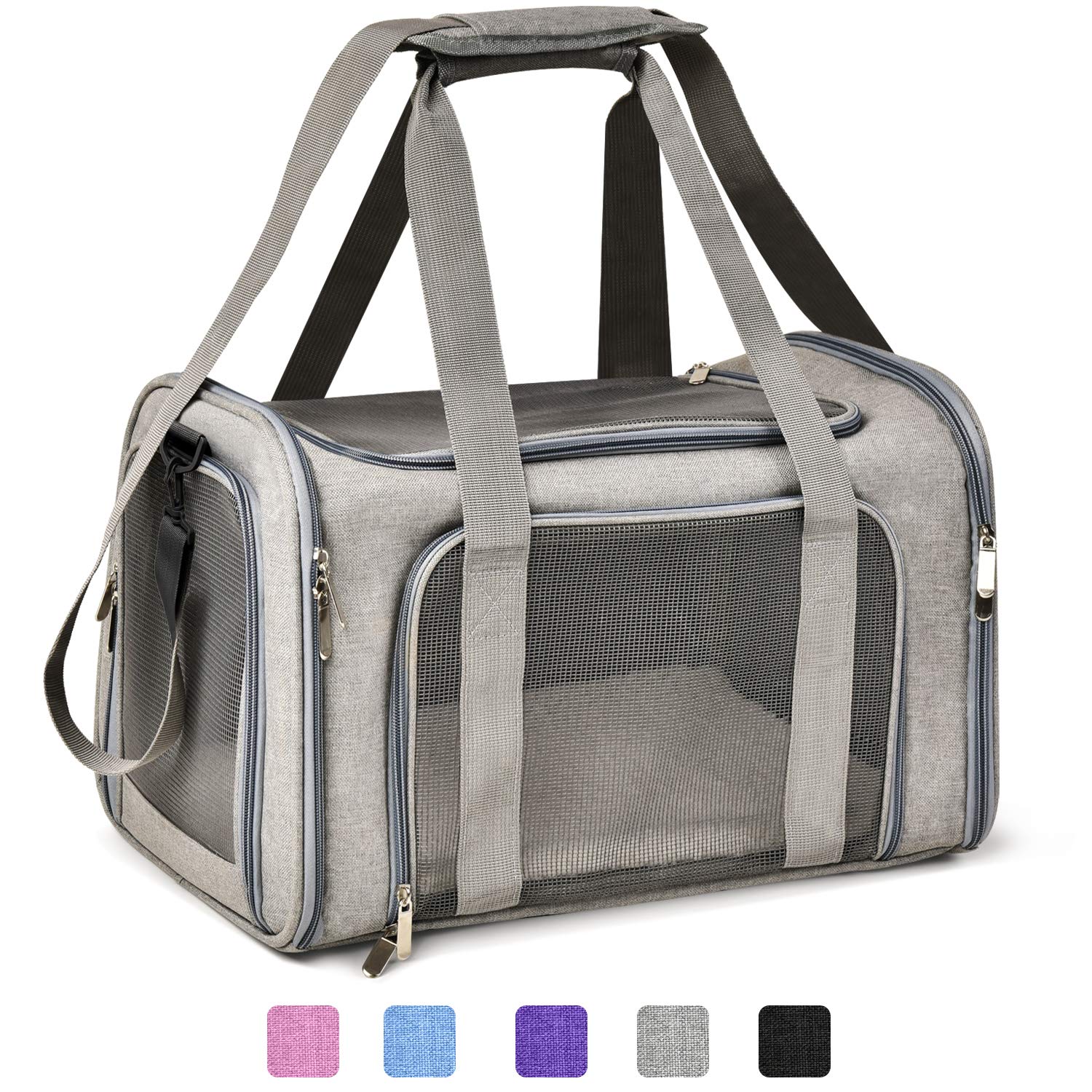
    Best lightweight carrier Henkelion Soft-Sided Pet Carrier (Medium) A 2 lb soft-sided carrier with mesh on four sides and a padded shoulder strap, for cats up to 15 lb on car trips or in an airline cabin.

    $24.48 Price as of Nov 25, 2026, 7:03 PM ET. Details

  6. Amazon Basics Hard-Sided Pet Kennel (23.6 in)
    Best for bigger cats Amazon Basics Hard-Sided Pet Kennel (23.6 in) A roomy 23.6 x 15.7 x 13 inch plastic kennel with a locking wire door and vented sides, rated for pets up to about 25 lb, for car trips and vet visits.

    $32.28 Price as of Nov 25, 2026, 7:17 PM ET. Details

Compare the picks

Product Type Openings Removable top Interior dimensions (in) Max pet weight (lb) Crash-test certified Airline-compliance claim Link
Sherpa Original Deluxe Best overall Sherpa Original Deluxe Polyester – – – – – – View on Amazon (opens Amazon in a new tab)
Sleepypod Air Best crash-tested Sleepypod Air Nylon – – – – – – View on Amazon (opens Amazon in a new tab)
Petmate Two Door Kennel (24 in) Best hard-sided Petmate Two Door Kennel (24 in) Plastic – – – – – – View on Amazon (opens Amazon in a new tab)
SturdiBag XL Best flexible carrier SturdiBag XL Fleece, Leather, Polyester – – – – – – View on Amazon (opens Amazon in a new tab)
Henkelion Soft-Sided Pet Carrier (Medium) Best lightweight carrier Henkelion Soft-Sided Pet Carrier (Medium) Polyester – – – – – – View on Amazon (opens Amazon in a new tab)
Amazon Basics Hard-Sided Pet Kennel (23.6 in) Best for bigger cats Amazon Basics Hard-Sided Pet Kennel (23.6 in) Metal, Plastic – – – – – – View on Amazon (opens Amazon in a new tab)

Specs as listed by the manufacturer or seller. Paid links.

Jump to section
  1. How we chose
  2. The best cat carriers
  3. How to choose the right cat carrier
  4. Tips for using your cat carrier
  5. FAQ
  6. Sources

How we chose

  • Top and front openings

    AAFP advises a sturdy carrier with both, so you can load from above or guide a cat in from the front.

  • Removable top half

    the vet can examine your cat in the bottom half without pulling it out.

  • Ventilation

    air has to move through the carrier, and your cat needs to see out or hide as it prefers.

  • Size for your cat

    a cat should fit comfortably, and AAFP says one cat per carrier.

  • Crash-test certification

    for car travel, a crash-tested carrier is the one AAFP says you can seat-belt.

  • Easy to clean

    accidents happen in carriers, so a surface that wipes clean saves time.

  • We compared 6 cat carriers that fit this page and picked 6.
  • Sources: manufacturer product pages and manuals, warranty terms, and the AAFP guidance on getting your cat to the vet for what a good carrier looks like.
  • Specs as listed: every value in our table comes from the manufacturer or seller listing. A dash means the listing does not give that spec.
  • We have not hands-on tested these products. Full method

The best cat carriers

5. Best lightweight carrier: Henkelion Soft-Sided Pet Carrier (Medium)

Henkelion Soft-Sided Pet Carrier (Medium)

Why we picked it

A 2 lb soft-sided carrier with mesh on four sides and a padded shoulder strap, for cats up to 15 lb on car trips or in an airline cabin.

Pros

  • Weighs about 2 lb and folds flat for storage
  • Mesh on four sides for airflow and visibility
  • Loop handles double as a seat belt or luggage strap

Cons

  • Rated for pets up to 15 lb only
  • Airline size limits vary: check yours before flying

Key specs

Type
Polyester

$24.48 Price as of Nov 25, 2026, 7:03 PM ET. Details

All specs and every list it is on →

6. Best for bigger cats: Amazon Basics Hard-Sided Pet Kennel (23.6 in)

Amazon Basics Hard-Sided Pet Kennel (23.6 in)

Why we picked it

A roomy 23.6 x 15.7 x 13 inch plastic kennel with a locking wire door and vented sides, rated for pets up to about 25 lb, for car trips and vet visits.

Pros

  • Rated for pets up to 11.3 kg (about 25 lb)
  • Metal wire door and side panels for ventilation
  • 1-year warranty

Cons

  • Front door only: no top opening
  • Too big for under-seat airline travel

Key specs

Type
Metal, Plastic

$32.28 Price as of Nov 25, 2026, 7:17 PM ET. Details

All specs and every list it is on →

How to choose the right cat carrier

The right carrier makes the vet visit calmer, but only if your cat accepts it. Read how to get a cat in a carrier for training steps, and see our cat bed picks for bedding that smells like home.

Match the carrier to the job. For a vet visit, AAFP advises a sturdy carrier with both top and front entrances, ideally with a removable top half so the cat can be examined in the bottom half (AAFP). For car travel, the crash-test column matters, and the answer to who did the testing matters more than the label. For a cat that dislikes the carrier, spend time on the training steps in our carrier guide before you worry about extra features.

Top and front openings

AAFP advises a sturdy carrier with both top and front entrances, and ideally a removable top half (AAFP). Check the openings column. A top opening lets you lower a nervous cat in, and a front door lets a cooperative cat walk in. Our guide to getting a cat in a carrier shows when to use each.

Removable top half

AAFP says a removable top half lets you guide the cat into the bottom half calmly (AAFP). It also lets the vet examine the cat while it stays in a familiar space. Check the removable top column and make sure the latches are easy to operate with one hand.

Ventilation

Check the listing for ventilation on more than one side. A towel over the carrier helps a nervous cat, so you need to be able to cover it without blocking all the air. Read the maker's notes on ventilation and follow them.

Size for your cat

Compare the interior dimensions and maximum pet weight in the table with your cat. AAFP says to use one cat per carrier (AAFP), so two cats need two carriers. A carrier that is too small is stressful; one that is too big may slide around in a car.

Crash-test certification

AAFP says to seat-belt a carrier on the back seat only if it has been crash-tested, per the Center for Pet Safety (AAFP). Check the crash-test column and read who did the testing. A maker claim is not the same as independent certification. Read the listing for details and see our carrier guide for where the carrier should ride.

Easy to clean

Look at the material and whether the liner or pad can be removed and washed. Hard-sided carriers are usually easy to wipe down, while soft-sided ones depend on the fabric. Check the maker's cleaning instructions.

Tips for using your cat carrier

  • Leave the carrier out in a room your cat uses, lined with soft, familiar bedding (AAFP).
  • Put treats, catnip or toys inside so the cat goes in on its own; adjustment can take days or weeks (AAFP).
  • Cover the carrier with a towel and carry it with both arms (AAFP). More in our carrier guide.
  • In a multi-cat home, AAFP says to leave the returning cat in the carrier for a few minutes so you can watch the other cats' reactions, and to separate the cat if there is hissing (AAFP).

FAQ

Top-loading or front-loading carrier?

AAFP's Cat Friendly advice is a sturdy carrier with both, ideally with a removable top half so the cat can be examined in the bottom half (AAFP).

How do I get my cat used to a carrier?

Leave it out in a room the cat uses, line it with familiar bedding and add treats or toys. Adjustment can take days or weeks (AAFP).

Where should the carrier ride in the car?

On the floor behind the driver or passenger seat. AAFP says to seat-belt it on the back seat only if it has been crash-tested, per the Center for Pet Safety (AAFP).

Can two cats share a carrier?

AAFP says one cat per carrier (AAFP).